Sapporo License Conversion Driving Route Maps: Routes A, B and C (2026)
View Sapporo foreign-license conversion driving maps for Routes A, B and C, with practical guidance on map study, safety actions and 50-question test preparation.
If you are preparing for the foreign-license conversion driving check in Sapporo, understanding the test-course layout is more useful than memorizing a sequence of turns at the last minute. This guide collects the Sapporo A, B and C driving route maps and explains how to use them to practise observation, junction decisions and road positioning.
You can also prepare for the 50-question knowledge check while waiting for your appointment. Use the WeChat Mini Program JP速通免许, search the App Store for the iOS app 日本免许速通, or practise through the JapanDL.com 50-question course.
01|What these Sapporo route maps show
The three images are labelled as follows:
• Foreign-license conversion, regular/semi-medium vehicle, Route A
• Foreign-license conversion, regular/semi-medium vehicle, Route B
• Foreign-license conversion, regular/semi-medium vehicle, Route C
Use the maps to become familiar with the start and finish areas, junctions, bends and narrow-course sections. The route, vehicle, course operation or examiner instructions may change on the day, so always follow the instructions you receive at the test centre.
The Sapporo Driver’s License Examination Center is at 5-4-1-1 Akebono, Teine-ku, Sapporo. It is about a 20-minute walk from JR Inaho Station, and buses also stop at the examination centre. Check the latest access and course-use arrangements before planning a visit or practice session.
02|Sapporo Route A map
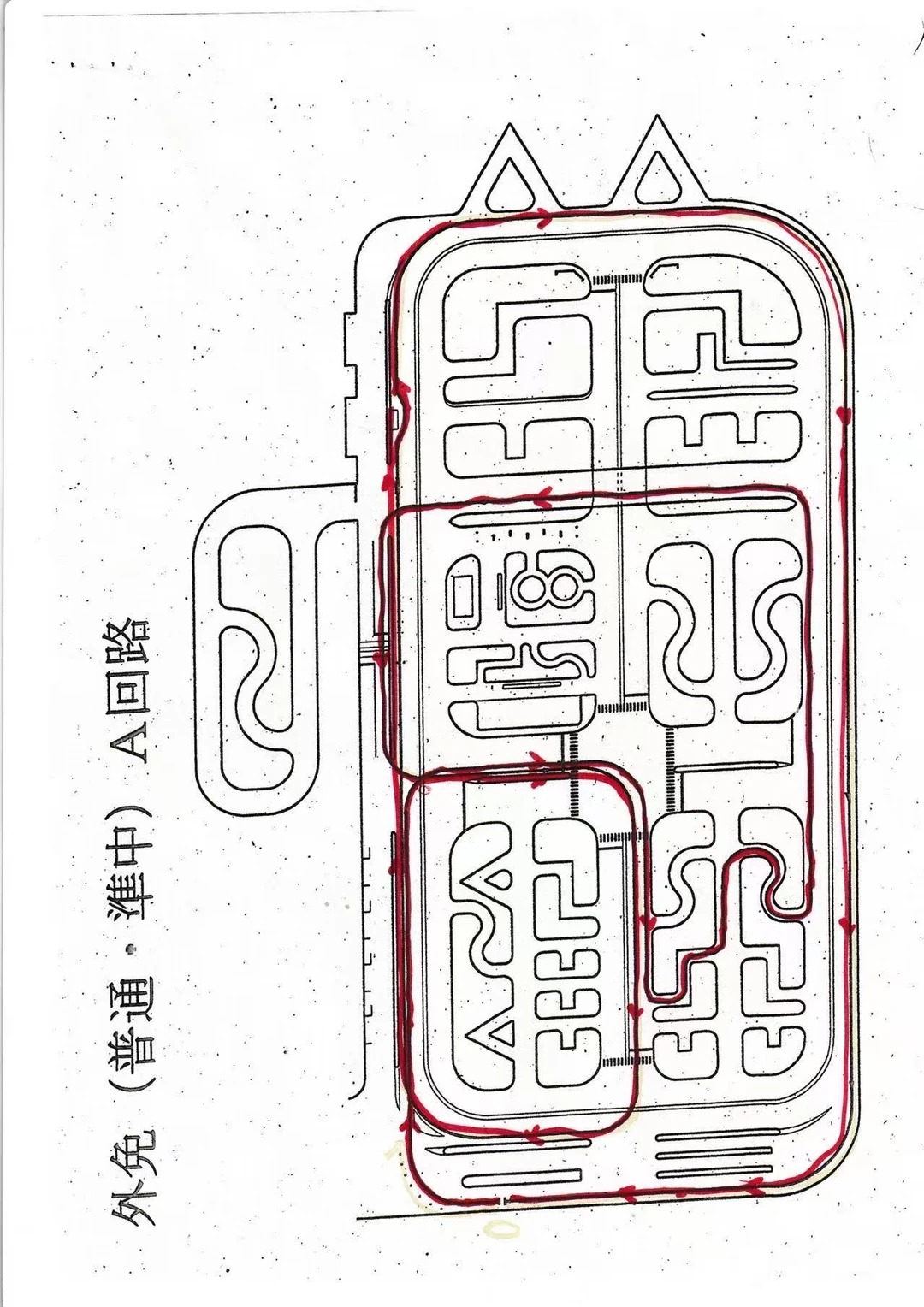
For Route A, first trace the red marking to identify the departure direction and return point. Then mark every place where the vehicle changes direction. Do not remember only “which junction to turn at.” Link each turn to the full routine: mirror → signal → blind-spot check → road position → reduce speed and turn.
03|Sapporo Route B map
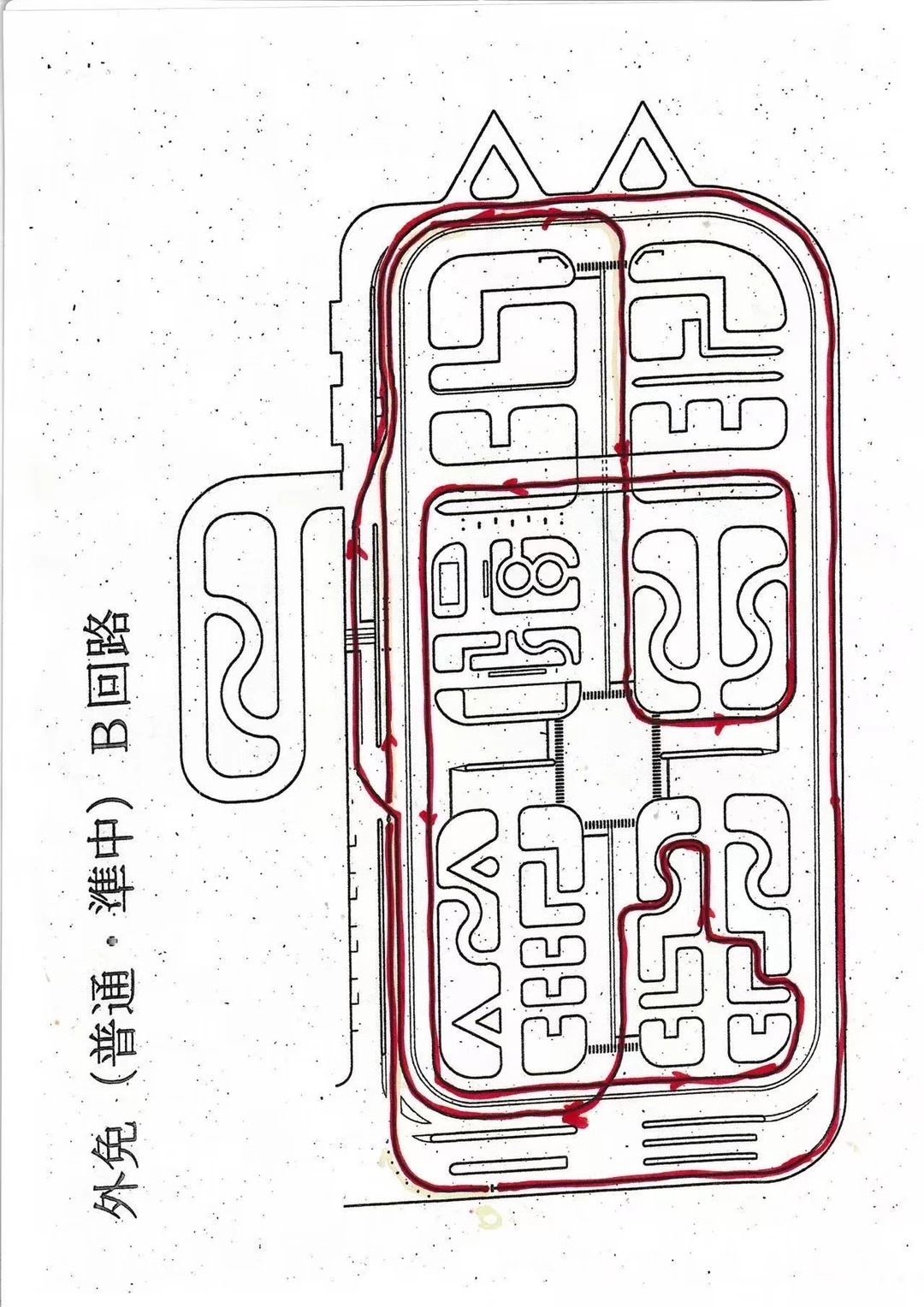
On Route B, pay attention to the distance between consecutive junctions. If another direction change follows soon after a turn, stabilise the vehicle and repeat your observations. Do not become so focused on finding the next turn that you miss pedestrians, stop lines or other vehicles.
04|Sapporo Route C map
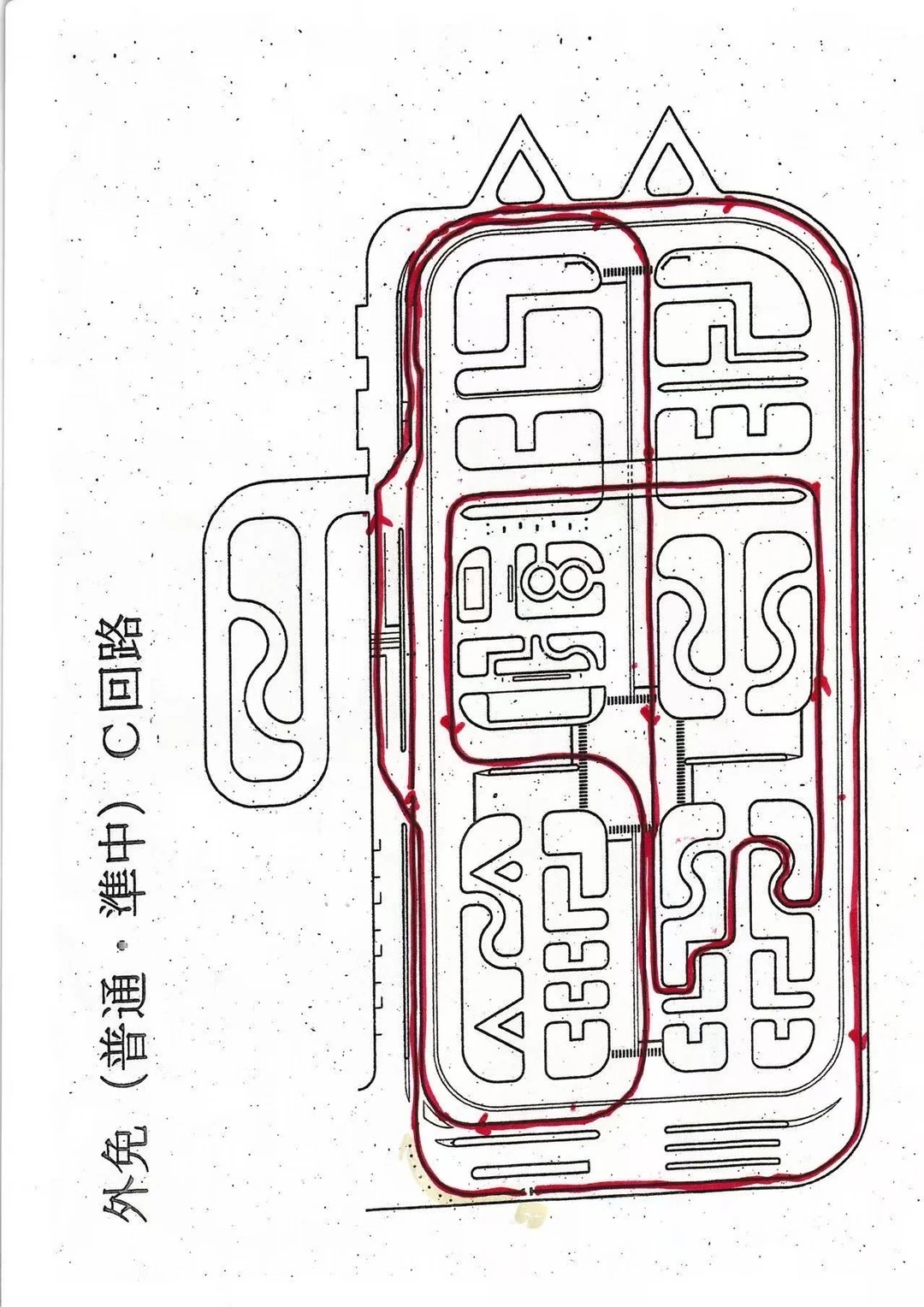
Avoid mechanical memorisation for Route C as well. Divide the diagram into the starting area, ordinary junctions, places requiring clear deceleration, narrow sections or bends, and the finishing area. Explain aloud which safety actions you would perform in each section.
The route-map materials were provided by a user and retain the source credit shown for the Xiaohongshu (RED) account “禾頌.” The original images and markings have been preserved. They are for familiarisation only; follow the route and examiner instructions given on the day.
05|Driving actions that matter on all three routes
Whether you are directed onto Route A, B or C, the check is not only about following the correct path. You need to demonstrate safe, visible and consistent driving actions throughout.
• Before moving off: adjust the seat and mirrors, fasten the seat belt, check the gear and parking brake, and observe the area around the vehicle
• Lane changes and turns: complete the mirror, signal and blind-spot checks before steering
• Stop lines: stop fully before the line, check both directions and then proceed
• Keep left: maintain a suitable left-side position without driving too close to the edge
• Junctions and limited visibility: slow down early and be ready to stop
• Narrow sections and bends: control the vehicle at low speed and look towards the exit
• Finishing: pull over as instructed, secure the vehicle and check behind before opening the door
The driving check tests actions; the knowledge check tests decisions. During revision, combine random practice, full simulations, explanations and error review in the WeChat Mini Program JP速通免许, the iOS app 日本免许速通, or the JapanDL.com 50-question simulation.
06|A five-step way to practise with the maps
Step 1: Understand the direction. Find the start, arrows and finish, then follow the overall flow.
Step 2: Mark decision points. Identify stop lines, junctions, bends, narrow sections and places where road positioning changes.
Step 3: Say the actions aloud. Explain what you will observe and do before and after each decision point.
Step 4: Mix Routes A, B and C. Alternating the maps helps you respond calmly instead of relying on one fixed sequence.
Step 5: Prioritise instructions on the day. If the actual route differs from the image, switch immediately to the current directions. Map memory never replaces observation and safe judgement.
07|How to use the appointment waiting period
As of August 2026, foreign-license conversion applications in Sapporo require an appointment, and the wait from booking to document screening may be lengthy. Once your documents are ready, arrange the application early and use the waiting period for two parallel tasks:
• Review Routes A, B and C each week and verbally rehearse the safety routine
• Complete 50-question simulations and review errors by category, such as signs and markings, priority, stopping and pedestrian protection
This keeps the written-rule decisions and practical driving actions connected.
08|Frequently asked questions
Will the driving check always use one of these three routes?
The maps help you understand the course layout and route examples. Operations may change, so drive according to the on-site briefing and examiner instructions.
Is memorising the Sapporo route maps enough?
No. The maps reduce unfamiliarity, but observation, deceleration, complete stops, signalling, blind-spot checks and vehicle control matter more.
Should I still practise the 50-question test before the driving check?
Prepare for the knowledge and driving checks separately. The 50-question practice develops rule-based decisions, while the route maps help you apply those rules through driving actions.
Which route map should I study first?
Start with A to understand the course, compare B and C, and then review them in a mixed order. The goal is to respond safely to any situation, not merely remember a route letter.
09|Start preparing for Sapporo license conversion
Save the three Sapporo route maps and review them in the order “direction → decision point → safety action.” At the same time, work towards stable results on the 50-question knowledge check.
Start practising now with the WeChat Mini Program JP速通免许, the iOS app 日本免许速通, or the JapanDL.com foreign-license conversion simulation.